

Councillor calls on DfI to make clear who has responsibility for sustainable drainage solutions
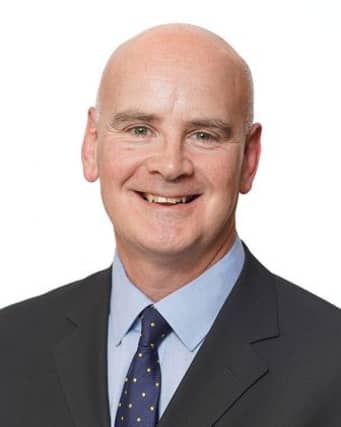

A councillor has called for new legislation to define exactly who is responsible for the provision of sustainable drainage systems (SuDS).
Speaking at a meeting of Council’s environmental services committee on Tuesday, June 7, Councillor Brian Pope said proposed revisions by the Department of Infrastructure (DfI) to legislation in relation to water, flooding and drainage do not go far enough to adequately tackle the climate emergency.
DfI has issued a consultation on nine key policy areas where it feels the current policy could benefit from change.
The consultation closed on June 3, but the council has been asked to submit its views on powers for NI Water to enter into private land to carry out works for flood risk management purposes including constructing sustainable drainage systems (SuDS) and enabling powers for DfI to introduce arrangements to encourage developers to use SuDS as the preferred drainage solution in new developments.
However, for Cllr Pope, these measures will not go far enough and he has called on Council to tell DfI new legislation, that clearly sets out who is responsible for the ownership and maintenance of SuDS, is required.
“We know that SuDS can help mitigate flooding but they also help in the treatment and quality of surface water before it is discharged to our rivers by removing the smaller particles, silt and hydrocarbons,” said Cllr Pope.
“The key issue is really the responsibility for the adoption, ownership and long term maintenance of SuDS measures be they porous paving, swales, retention ponds or the variety of other wetlands and other types of SuDS available.
“Unfortunately, I believe the guidance alone won’t encourage these measures and therefore we need new legislation which defines precisely who will be responsible for these SuDS features whether it be DfI, NI Water or someone else.
“I am happy to propose our response to this consultation but would like to make one change.
“I would like us to state that DfI should provide clearly defined guidance, backed by new legislation, to defining which department, body or persons, should be wholly responsible for the adoption, ownership and long term maintenance of SuDS solutions in order to mitigate flooding and improve the quality and treatment of storm water discharge to the water environment.
“Furthermore, DfI should consider making the provision of SuDS treatment and storage measures mandatory of all new developments.”
This proposal was seconded by his party colleague, Councillor Jessica Johnston.
Alderman Stephen Moutray said he was not opposed to the proposal but requested some time to consider it and asked that the matter be deferred until the council’s monthly meeting on Monday, June 27.
Council’s head of environmental health, Gillian Topping, said she was of the view the proposal is in keeping with the nature of the council’s draft response and confirmed it could be updated for councillors to decide upon at this month’s meeting.
Upon receiving confirmation the matter would come before the council on June 27, Cllr Pope confirmed he was content and the committee supported the proposal to have the wording drafted and presented to the council.
Speaking to the Local Democracy Reporting Service following the meeting, Cllr Pope said he believes the changes he is calling for are vital if the Department actually wants to see SuDS treatment schemes being used in the long term.
“Without clarifying exactly who will adopt and maintain these SuDS treatment schemes over the long term, backed up by legislation, I don’t believe they will be used,” he said.
“We already have had guidance on SuDS treatment for many years but this has failed to have an impact.
"In order to reduce hydrocarbons, pollution and smaller silt particles discharging to our watercourse, which is bad for biodiversity, fish and our leisure use, it is vital a mandatory requirement for all new development sites including housing, commercial and retail to include SuDS treatment facilities is introduced.
“I cannot emphasise the mandatory requirement for all new developments enough as I don’t believe they will be installed without the authorities insisting on SuDS treatment for all planning consents.”