

Trust ramps up efforts to manage ambulance pressures
New home treatment crisis care for those with mental health issues is to be implemented by the Southern Health Trust in a bid to manage pressures on the Craigavon Hospital.
The news came as Cllr Paul Berry, who sits on Armagh, Banbridge and Craigavon Council as an independent unionist, raised concerns about ambulance workflow and handovers at Craigavon Area Hospital.
-

-
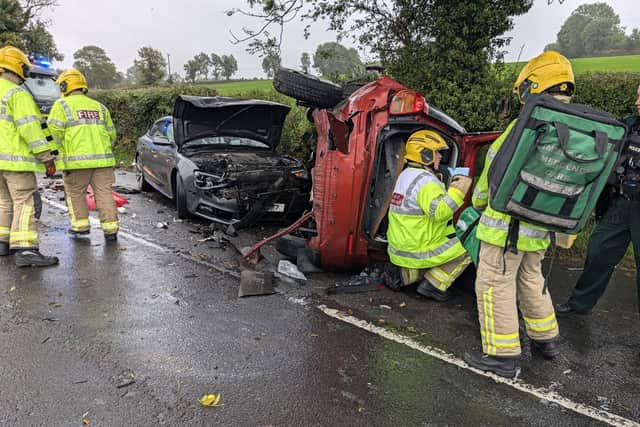
The Alderman was involved in a serious 3-vehicle road collision on October 8, this year after which an elderly man waited more than 2 hours on the roadside for an ambulance. Another injured person waited more than 3 hours for an ambulance.
Cllr Berry, who was uninjured in the incident, was horrified at the length of time those injured had to wait on ambulances.
The Trust blamed additional pressures at the Emergency Department adding it had introduces a new Release to Rescue protocol in April to free up ambulances within 2 hours. It has also introduced the Home Treatment Crisis Response Service this month which aims to treat those in health crisis in the community rather than in hospital.
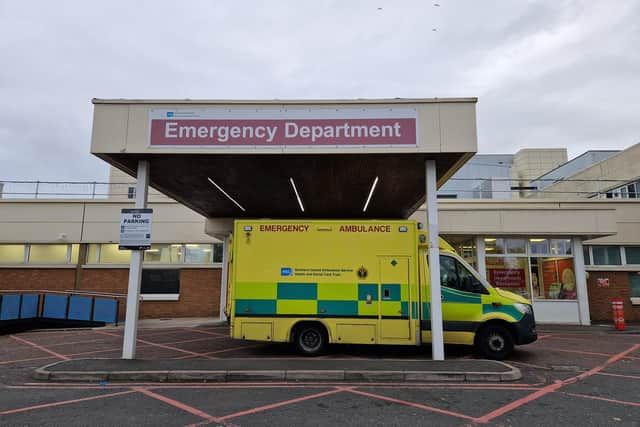
The Release to Rescue scheme was set up in April this year across all 6 health Trusts. It seeks to ensure that ambulance crews are able to hand over patients to the clinical care of Emergency Department staff within two hours of arrival. The aim is to free up NI Ambulance Service crews so they are available for the next emergency.
The Trust said it is the first phase of a ‘whole system change’ and ‘won’t be a quick fix’.
Cllr Berry met with Mark McCrudden, the Southern Trust’s Director of Medicine and Unscheduled Care, to address ‘the issue of systemic delays and to ensure emergency resources are returned to the community as swiftly as possible’.
"The urgency of these reforms was highlighted during the October 8th collision, where a heavily constrained system led to extended wait times at the scene.

"The first ambulance crew arrived 2 hours and 19 minutes after the call to treat an injured man in his 70s, while a second ambulance arrived 3 hours and 26 minutes after the collision to assist a second injured man.
"Significantly, on the day of this incident, only one ambulance was waiting at the A&E department, with all other available ambulances fully deployed across the network,” said Cllr Berry.
"Despite 10 to 13 ambulances being operational at any given time, the extreme pressure on the system meant up to 20 patients in the community were waiting on an ambulance deployment simultaneously.
"Another contributing factor to this systemic pressure is the rising demand on mental health provision, which heavily impacts ambulance availability.
Referring to his accident, the Tandragee man said: “This isn’t an isolated incident; many others across our community have reached out to me having experienced similar distressing delays, and I knew we had to address the root causes directly with Trust management.”
Alderman Berry added: “While the frontline staff and paramedics are working tirelessly under immense pressure, a 50-minute average waiting time to turn an ambulance around is simply unsustainable when the target is 30 minutes. Following our productive meeting, I am encouraged that the Trust is actively pursuing more efficient turnaround strategies.
"Furthermore, I have been assured that a different approach is being actively considered to address the severe impact that mental health demand is placing on our ambulance service.”
Cllr Berry praised the emergency workers who managed the scene of the October 8th crash. “I want to salute the NI Fire and Rescue Service, the PSNI, and our Ambulance crews for their incredible service. They are real heroes who do an exceptional job under incredibly difficult conditions, and they deserve a system that fully supports them.”
A spokesperson for the Southern Health Trust said: “Trust senior staff met recently with Councillor Berry to discuss the severe and ongoing operational pressures being experienced in emergency departments, hospitals and across the health and social care system.
"The Councillor was provided with an in-depth briefing in relation to these severe operational pressures which detailed the significant ongoing challenges in admitting patients due to our hospitals working at almost full capacity which has an impact on waiting times in EDs and the number of ambulances waiting outside hospital.
"The Trust is committed to maintaining safe and timely handovers for patients arriving at our Emergency Departments and taking steps to reduce waiting times for patients.
"We have been working hard to follow the Release to Rescue protocol and Craigavon Area Hospital has consistently achieved the 2 hour turnaround target since inception (April 26) and has been one of the best performing ED’s in NI in this regard - with a significant reduction in the number of ambulances waiting for long periods outside the hospital.
"This reflects the ongoing hard work of staff across our Emergency Departments, ambulance services and wider hospital teams to support timely patient flow and ensure ambulance crews can return to serving patients in the community as quickly as possible.
"The introduction this month of a new pilot pathway between the NI Ambulance Service (NIAS) and the Trust’s Home Treatment Crisis Response Service (HTCR) was also discussed at the meeting.
"This initiative aims to enhance access to timely mental health support for people experiencing a mental health crisis in the community who don’t need to attend the Emergency Department.
"The Home Treatment Team will carry out a mental health assessment and if it is decided that acute care is required they will seek to offer this at home. Home Treatment is acute care at home and is equivalent to what individuals receive in hospital on a 24 hour basis, seven days a week.
"This includes daily contact by nurses and support workers, Consultant review, required investigations, pharmacy input, alongside multi-disciplinary input, adequate out of hours cover and support on planning for discharge.”